















Ask any education technology team what success looks like and the answer is usually a number with a lot of zeros: learners reached, schools onboarded, minutes watched. Scale is the default goal. It is worth asking whether it should be.
Reach is not learning
A platform used by 2 million students for four minutes a week has reach. A programme that changes how 40,000 children read in a single district has depth. The second one is harder to put on a slide, and far more likely to show up in an assessment.
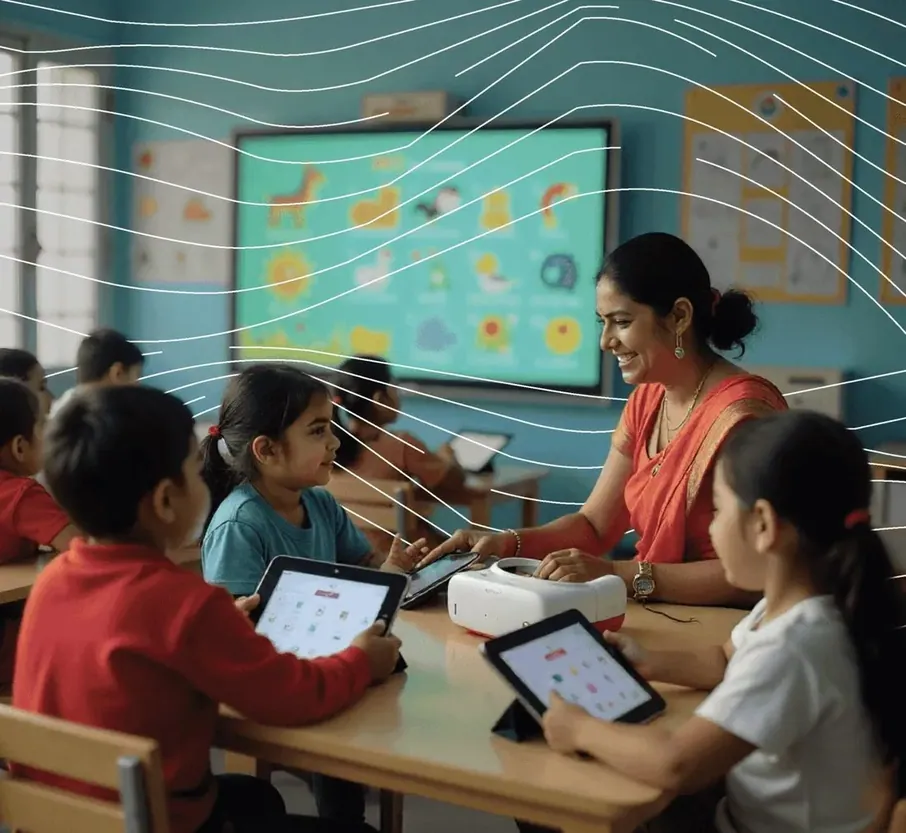
In the schools we work with, the tools that move outcomes share three traits: a teacher decides when they are used, they work on the one shared device in the classroom, and they tell the teacher something she didn’t already know.
The question isn’t how many children touched the product. It is how many of them can now do something they couldn’t.
When depth beats reach
- Foundational learning, where progress depends on practice and feedback, not content.
- Teacher-led classrooms, where a tool that fits the lesson plan beats a tool that replaces it.
- Low-connectivity districts, where a lighter product that always works beats a richer one that sometimes does.
Scale still matters. But scale of a thing that works, earned district by district, is worth more than reach bought in a single launch.